Showing posts with label Film News. Show all posts

Rowan Atkinson has again become a victim of celebrity death hoax.


According to the Travelers Today report, rumours started from a fake CNN source that the 58-year-old actor, who is well-known for his work on the sitcoms Mr. Bean, committed suicide after a producer removed him from the Johnny English 3 film project.

"English Actor Comedian Mr. Bean (Rowan Atkinson) died at 58 after committing suicide. The comedian committed suicide right after the producer remove him on Johnny English 3. Rowan Atkinson(Mr Bean) recorded a suicide video with a message to his producer and fans around the world," the CNN update read, according to Online Threat Alerts (OTA) report.

Such false reports about celebrities death have started spreading across Facebook through an app that uses logos from well-known news outlets, provoking users to click.

Previously, the free encyclopedia - Wikipedia - was fooled into believing Atkinson's death. There were swift updates to his page on the website, including a date of death - 26 February, 2012. Needless to say, it was soon corrected.

The list of celebrities affected by similar hoaxes is growing all the time, and includes Reese Witherspoon, comedian Bill Cosby, Robert Pattinson, Denzel Washington, Adele, Justin Bieber and Lady Gaga.

Meanwhile, Oscar-winning actor Morgan Freeman personally came forward to clear rumours and poke fun at fake stories suggesting he had died, assuring fans he was alive and well.

Celebrities are often subject to abuse from cyber bullies, often referred to as Internet trolls.

In a previous report by IBTimes UK, it was noted British pop star Adele, who recently welcomed her first child with fiancé Simon Konecki, received cruel tweets over her weight, post-natal depression and even the death of the newborn.


Metro Manila (CNN Philipines) — The "world's most powerful" person — at least by the standards of Forbes magazine — will be coming to the Philippines two weeks from now, during the Asia Pacific Economic Cooperation leaders' meeting in Manila.

In its annual "Ranking of the World's Most Powerful People" Forbes gave the top spot this year to Russian President Vladimir Putin. According to the magazine, he is "one of the few men in the world powerful enough to do what he wants — and get away with it." The list of 73 individuals consists of a mix of figures from business, media, and politics.


Despite Russia's seizure of Crimea, the conflict in Ukraine, and international sanctions, the magazine pointed out that Putin has enjoyed strong public support at home. In June, his approval ratings reached an all-time high of 89%.

Forbes also said that Putin's bombing of ISIS forces in Syria and face-to-face meeting with Syrian President Bashar al-Assad have made "the U.S and NATO look weak in the region, and [have helped] rebuild Russian influence abroad."

Worlds_10_most_powerful_people_Forbes_CNNPH_FB (1).png
It is the third consecutive year for Putin to top the list. German Chancellor Angela Merkel rose to second place while U.S. President Barack Obama slid to third. Pope Francis, the spiritual leader of over one billion Roman Catholics around the world remained at fourth place. Chinese President Xi Jinping slid to fifth from third last year.

So yes, the world's 3rd and 5th most powerful figures will also visit the country during the APEC meeting.

Rounding out the bottom three were World Health Organization chief Margaret Chan (No. 73), U.S. presidential aspirant — and business figure — Donald Trump (No. 72), and "Africa's richest man," Aliko Dangote (No. 71). No one from the Philippines made the list.


Whereas Marvel has created a linear and cohesive timeline with the Marvel Cinematic Universe, Fox’s X-Men universe is a little trickier to keep track of. With its many contradictions and inconsistencies over the course of seven movies, you'll be longing for the days when Halle Berry's dropped accent was the biggest problem you could find.

Luckily, we've done the hard work for you and created a definitive X-Men movie timeline.

Check out the video above for that and more.  


The first cut of Captain America: Civil War was two hours and forty-one minutes long. The final cut is 13 minutes shorter, so don’t expect to see too many deleted scenes on the Captain America: Civil War Blu-ray. DirectorsAnthony and Joe Russo cut a few minor sequences, but nothing major was tossed aside in the editing room.
Below, find out about two scenes cut — both in the writing process and in post-production — from Captain America: Civil War (minor spoilers ahead).
For a film that’s almost two and a half hours long, Civil War moves at a pretty quick pace. Going into the shoot, the Russo brothers and screenwriters Christopher Markus and Stephen McFeely wanted to make sure there was hardly any bloat in the script, so that the directors wouldn’t ever find themselves shooting expendable scenes.
When we spoke with Markus and McFeely, they had difficulty recalling any specific deleted scenes from the film, but they did remember one character introduction that was initially handled differently:
Are there any memorable scenes that were cut in the writing process? Are there any scenes that you both miss from the final cut?
McFeely: Nothing that we miss. The brothers pride themselves on shooting only what they need, but shooting the hell out of it.
Markus: I don’t think there’s anything we shot…We wrote some fun…There was a point where we went all the way with Scott Lang in San Francisco and got to have a little more taste of what his life was like, and it was fun to write for us. But it was unnecessary, so it never made it to the camera.
Can I ask what was his life like in San Francisco?
McFeely: No!
Markus: No! We were probably wrong. Because of the nature of when we start making the movie versus when it comes out, as we’re doing it for Infinity War, we wrote a lot, if not all, of Scott Lang’s stuff before we ever saw Ant-Man. You just have to roll with that because we need to film.
McFeely: We assume that the Infinity War drafts we turn in shortly are…we’re probably just wrong on some of these voices.
Unfortunately, a clip of Scott Lang’s actual introduction in the film has already been released online. It’s a fun character moment, one that moves the story along more efficiently than a trip to San Francisco would have. In Markus and McFeely’s original draft, Ant-Man wasn’t alone. Wasp originally partook in the airport set piece, but Marvel’s Kevin Feige decided to hold off on introducing the character for Ant-Man and the Wasp.
At the junket for Civil War, the Russo brothers also had a tough time recollecting scenes that didn’t make the final cut. In an interview with Comic Book.com, Joe Russo told the outlet only about this one Captain America: Civil War deleted scene:
There was a scene between Natasha and T’Challa at the German Ops Center, halfway through the movie when he was sitting in that room. Cap and Falcon had been isolated in the other conference room. We didn’t feel like it was moving the storytelling forward and they had already had a scene. It felt repetitive, so it was something we excised from the movie.
It’s probably for the best that scene was cut. Natasha and T’Challa have quite a few exchanges as is, and not much else is needed to further flesh out that relationship. There’s just enough of those two characters together in the film. In fact, their chemistry is memorable enough that, say if Black Widow appeared in a future Black Panther movie, it honestly wouldn’t be very surprising. After Captain America: Civil War, she’s the one character T’Challa has formed the strongest connection with. If Ryan Coogler‘s Black Panther features any significant connection to the other MCU movies, it could be through Natasha.

theCaptain America trilogy is better than The Dark Knight trilogy. What follows is my rebuttal, in which I assert the opposite: Matt’s wrong, The Dark Knight trilogy is superior to the Captain America trilogy.
The most obvious point of contention here is that the Captain America trilogy barely qualifies as a trilogy. Captain America: Civil War is an ellipsis, not a period, and does not bring Steve Rogers’ arc to a close. I’d even go so far as to argue that Civil War is more of an Iron Man film than a Captain America film, as Tony drives the emotional backbone of the story—the movie literally opens on Tony Stark! Meanwhile, The Dark Knight Rises is a very definitive period—it concludes the Batman arc that Christopher Nolan began with Batman Begins, and does so with the same creative team intact.

christopher-nolan-the-dark-knight-rises
Image via Warner Bros.
Indeed, there’s a consistency and, frankly, higher quality of filmmaking to The Dark Knight trilogy that’s lacking in the Captain America films. The screenwriting team of Nolan,David S. Goyer, andJonathan Nolan crafted the stories and scripts for all three films, cinematographerWally Pfister shot each movie, and Nolan, of course, guided it all through his authorial voice as the trilogy’s director. That’s not to say each film is the same, but there’s a consistency of vision and character in The Dark Knight trilogy that allows for a more full and satisfying arc, even if the concluding installment is admittedly much messier than the first two films.
From a visual standpoint, each of Nolan’s Batman’s films is far more compelling, distinguished, and ambitious than anything in the Captain America movies. DirectorJoe Johnston attempts to capture the tone of a World War II film with Captain America: The First Avenger, but the illusion never succeeds due to ugly digital photography that fails to marry the visuals with Johnston’s thematic ambitions. And while directors Joe and Anthony Russo find greater success in striking something more along the lines of a Bourne movie’s visual palette with The Winter Soldierand Civil War, it still doesn’t hold a candle to the sophisticated vitality and grandiosity of The Dark Knight trilogy.
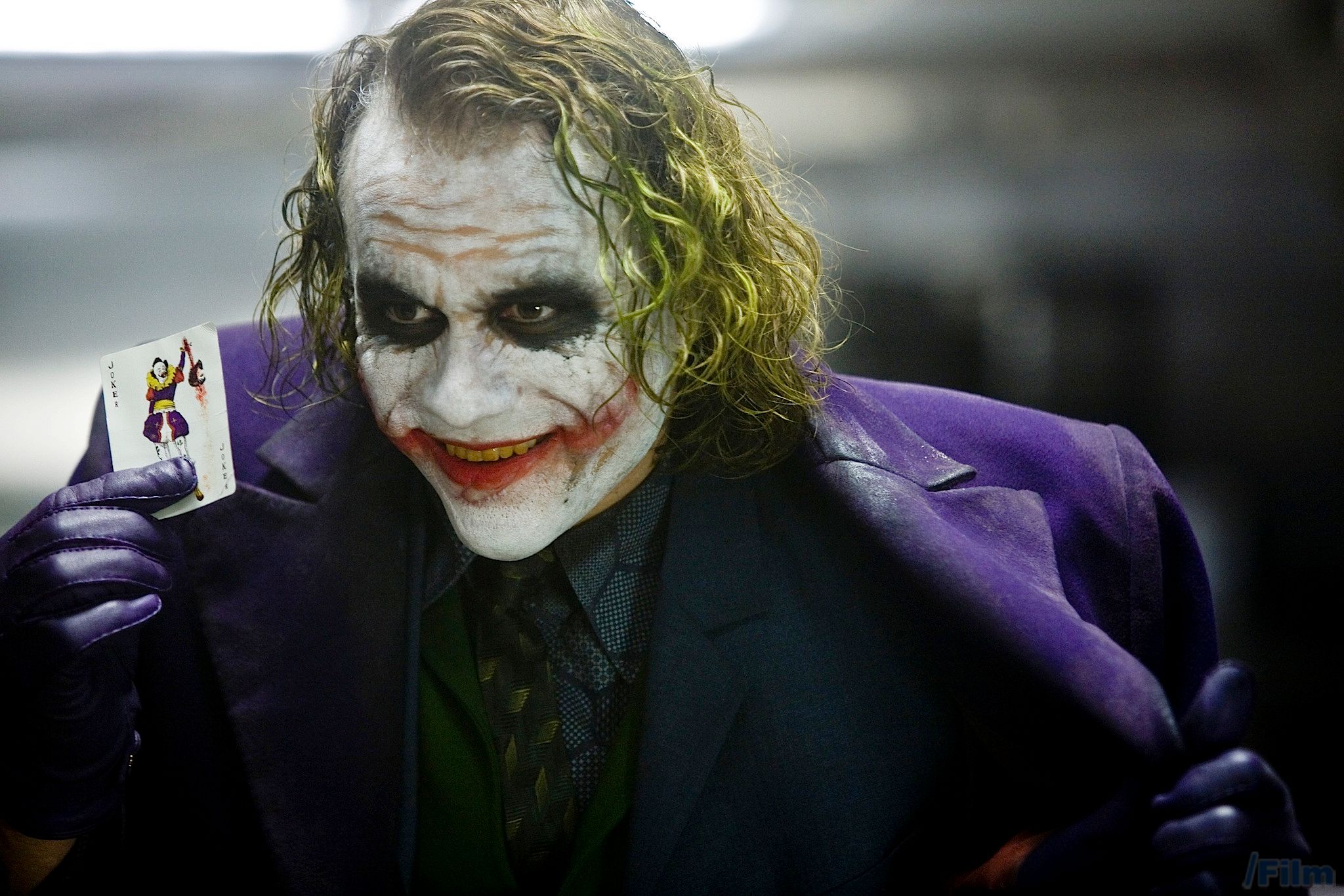
the-dark-knight-heath-ledger
Image via Warner Bros.
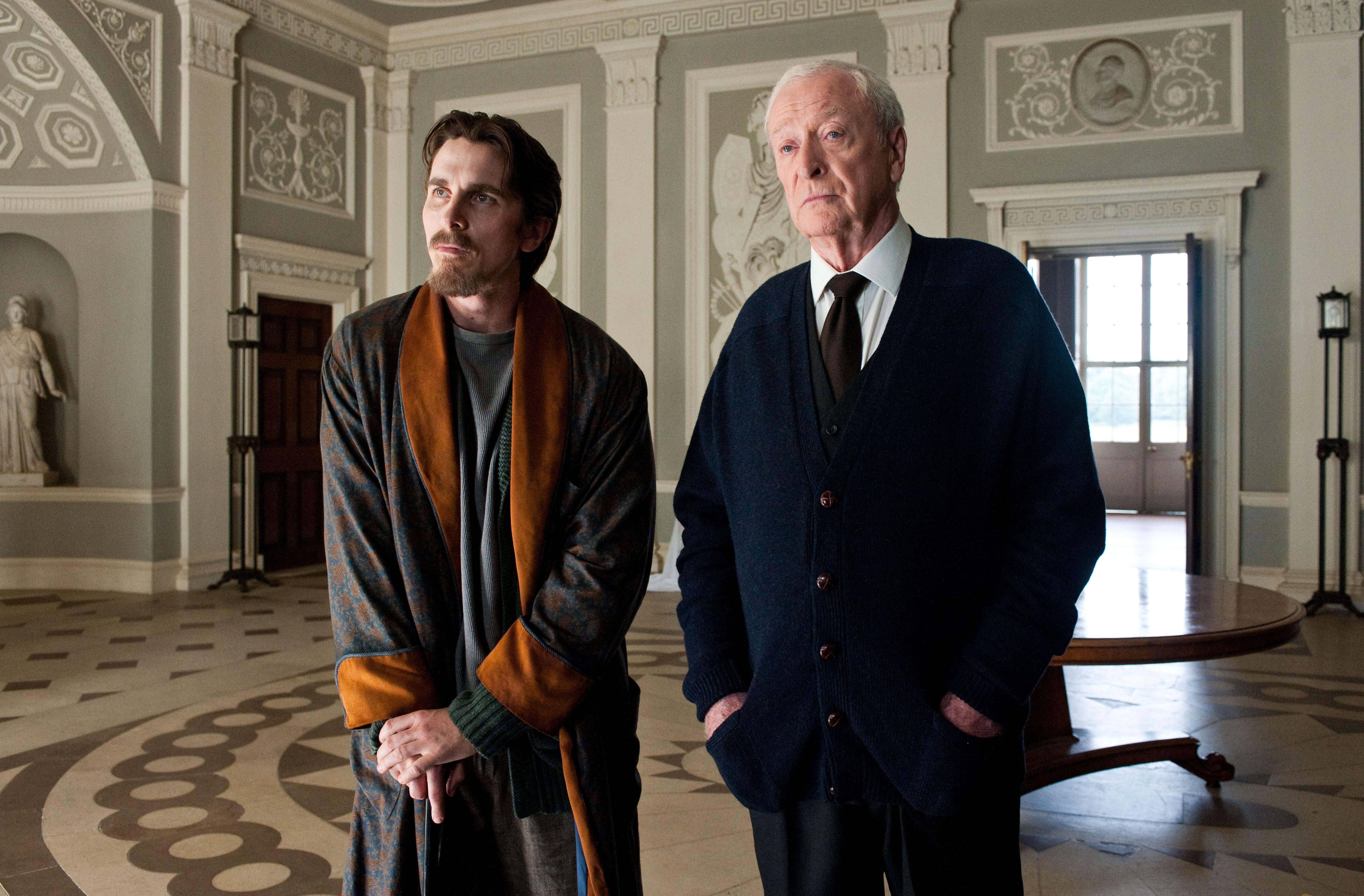
In terms of character, Heath Ledger’s Joker is an iconic performance that has already solidified its place in cinematic history. Aaron Eckhart brings tremendous dynamism to the Harvey Dent/Two-Face role and wildly succeeds in selling the character’s entire emotional arc within the span of one film. Cillian Murphy’s fearlessness of Scarecrow makes him all the more dangerous and thematically appropriate, Anne Hathaway’s Catwoman is endlessly compelling, Michael Caine’s turn is the definitive Alfred, and Gary Oldman’s Gordon as realized is a magnificent foil/ally to the Caped Crusader.

Alternatively, the Captain America films have yet to introduce a single villain as complex and memorable as Ledger’s Joker or even Eckhart’s Two-Face—even inCivil War, Bucky/The Winter Soldier is never anything more than a personality-less punching machine. Even the supporting roles are routinely forgettable as full character arcs are shorted in favor of continuing the story in future installments of the Marvel Cinematic Universe.
And that’s one of the main reasons why The Dark Knight trilogy is superior. TheCaptain America trilogy, by design, is part of a larger cinematic universe. A character like Scarlett Johansson’s Black Widow is not going to run through a tremendous amount of story in Winter Soldier because she still has to continue to evolve inAvengers: Age of UltronCivil War, etc. And that’s okay—this is how the Marvel Cinematic Universe works, with films acting more like episodes in a larger TV series than standalone features. But it only allows for a limited amount of closure in each film, meaning you’re unable to fully realize something as disturbing or impactful as Harvey Dent’s fall from grace in The Dark Knight.
christian-bale-batman
Image via Warner Bros.
Indeed, Chris Evans’ Steve Rogers is really the only character who gets to enjoy arcs in the Captain Americafilms (save for Civil Warwhich, again, is more of an Iron Man movie), and even still is a far less interesting and compelling character than Christian Bale’s Batman. If Captain America represents who we should aspire to be, Batman represents who we are. That, I’d argue, is not only more interesting, but also more insightful. The entire lesson learned at the end of Christopher Nolan’s The Dark Knight Trilogy is that one man can make a dent, but it takes a movement, a city, to truly enact change. Steve Rogers is a do-gooder who doesn’t like bullies and has distrust for fascist oversight. Darker doesn’t always mean better, but it sometimes does mean more complex, and the shortcomings of Bale’s Bruce Wayne make him far more compelling and, most importantly, relatable.
Admittedly The Dark Knight Rises attempts to juggle too many thematic issues at once while short-changing its villains towards a predictable outcome, but when taken as a whole with Batman Begins and The Dark Knight, the thematic throughline is realized fully and truly. Bruce Wayne attempts to right Gotham by becoming a symbol for the city, but the existence of Batman only brings about more intense destruction. In the end, the city can only thrive with unity and teamwork, with many people motivated to enact change, not just one man.

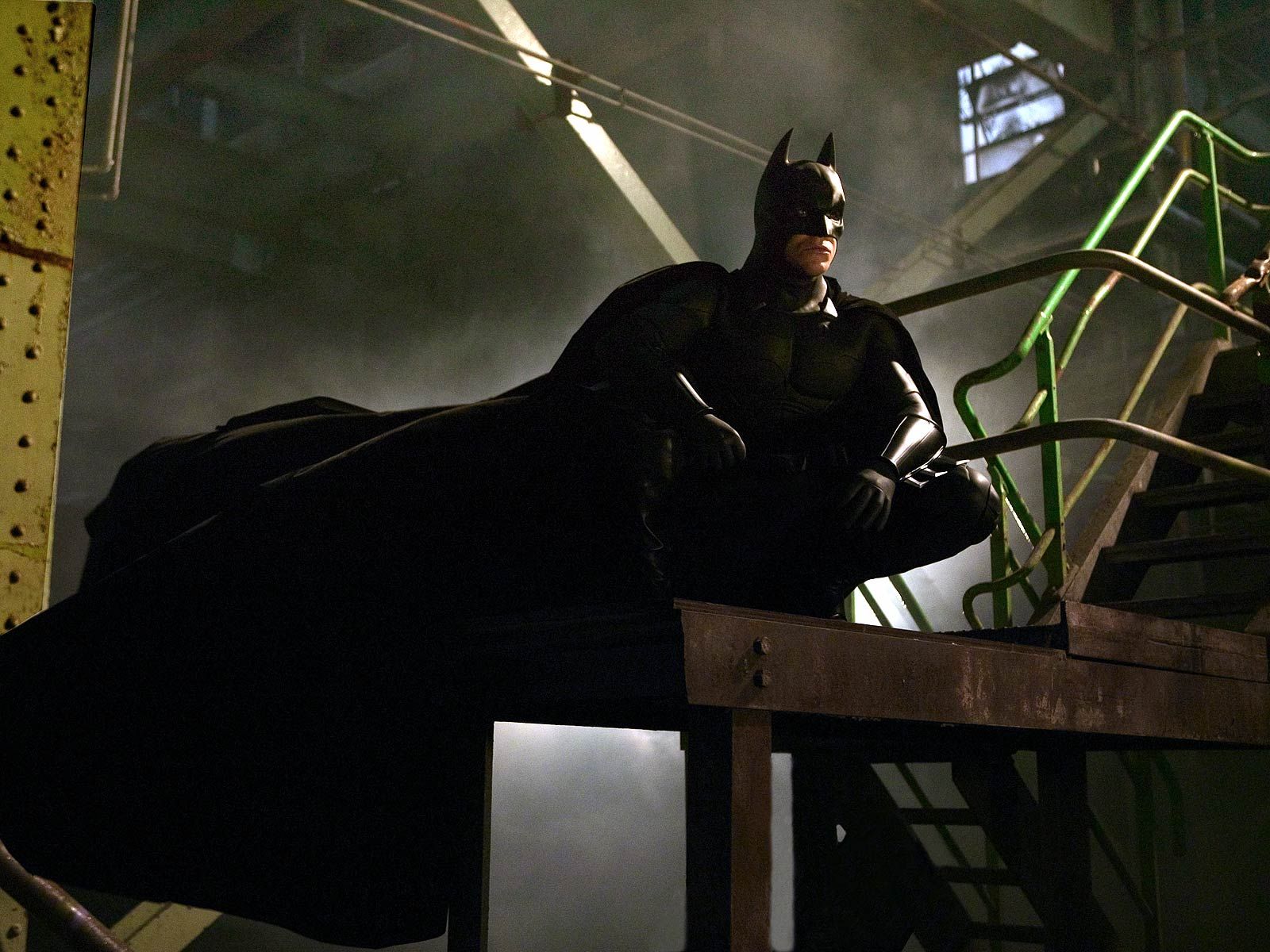
batman-begins-christian-bale
Image via Warner Bros.
When it comes to the individual Batman films, particularly Batman Beginsand The Dark Knight, the themes are far better realized than in any of theCaptain America movies. Again, this is a consequence of the Marvel Cinematic Universe. A film like The Winter Soldier can attempt to tackle larger issues that speak to the world we live in, even broaching post-9/11 fears, but it’s also intently focused on introducing new superheroes, explaining the shady organization known as Hydra, and concluding in another lackluster, explosion-filled aerial battle.
In The Dark Knight, the theme of escalation informs everything. Ledger’s Joker is a man possessed, chaos personified, and the existence of someone like The Batman is precisely what allows for The Joker to exist. This not only takes a toll on Wayne’s psyche, but also draws clear parallels to America’s place in the post-9/11 world that resonates fully. Nolan’s tackling hard truths to which there are no easy answers, and instead of concluding in a knock-down, drag-out fight or a race against the clock to prevent a nuclear weapon from detonating (those come in The Dark Knight Rises—hey, this trilogy ain’t perfect!), The Dark Knight ends with one of the most emotionally charged and disturbing confrontations in modern blockbuster cinema. And even then, Nolan doesn’t wrap things up in a neat bow—the death of the villain (in this case Dent) isn’t the end of villainy, because Batman reflects real life.
the-dark-knight-rises-christian-bale-michael-caine
Image via Warner Bros.
One man cannot save the world, and while Captain America is inspiring, it’s a fantasy—an enjoyable one to be sure, but a fantasy nonetheless. And while theDark Knight trilogy is a piece of fiction, Nolan’s emphasis on keeping the superhero adaptation grounded results in a piece of fiction that’s thrilling and chilling to the core not just because it’s spectacular filmmaking, but because it all seems so familiar.


This marriage of blockbuster cinema with prescient themes makes the Dark Knighttrilogy all the more worthwhile, and while the Captain America films broach thematic subject matter that’s also relevant to the world we live in, it’s far more focused on continuing the TV series known as “the Marvel Cinematic Universe.” Which, again, there’s nothing wrong with this concept in and of itself, but when stacking up the three Captain America films (thus far) against Christopher Nolan’s since-concludedDark Knight trilogy, the latter excels via cohesiveness, closure, and craft.

batman-begins-the-dark-knight-the-dark-knight-rises-poster


EXCLUSIVE: A two-week bidding battle has finally ended and Netflix has wonBright, a Max Landis scripted cop thriller with fantastical elements and tent pole potential that David Ayer will direct, with Will Smith and Joel Edgerton starring. This is a game changer; Netflix’s Ted Sarandos got a big ticket feature, and he paid a premium for it. I’m told that Netflix will invest north of $90M in the entire package. That includes north of $3M for the Landis script, making it one of the largest spec deals for a writer in years. The film will cost around $45M to shoot, meaning that just about that much will be invested in talent fees, and also to buy out their back ends; while there could be a limited theatrical launch day and date, Netflix is doing this to serve subscribers to its streaming service in countries around the world and so there will be no backend residuals. This deal dwarfs by one-third the premium that Netflix paid to get the David Michod-directed War Machine, starring and produced by Brad Pitt.
This is a different kind of coup for Netflix. The package brought heat the moment Deadline revealed it was coming to market on March 2, because Ayer and Smith just completed the Warner Bros/DC film Suicide Squad, which is expected to be a major summer hit. Though it will be R-rated, Bright is much closer to Men in Black‘s commercial qualities and VFX than anything Netflix has done before, and it is meant to launch a franchise. It quickly got reported that Netflix put in a significant bid and won the property, but it wasn’t decided until much much later. The auction took so long because there were at least two other suitors. Warner Bros teamed with MGM, and they were willing to go as high as the high $50M,  all in. Also bidding was PalmStar’s Kevin Frakes, who offered $4M for the Landis script and committed to a total budget around $60M. Both of those bids would have been to make a traditional wide release theatrical film. The principals made the decision on Netflix two days ago, and it has taken this long to make the deals, with Landis just closing. The producer deals are still not completely done, but Eric Newman, Ayer, Landis and Bryan Unkeless will share producing duties.


The film will shoot this fall in Los Angeles. The location was important to Ayer, who has made the city a location in all his cop procedurals. I will have more on why the principals took the leap here, but suffice to say, they all embraced the idea of a disruptive model. Netflix made it easier by ensuring they would be compensated as they would have with a hit movie. CAA packaged the deal,repping Ayer,Smith,Edgerton and Newman. WME repped Landis in the script deal. Landis is managed by Writ Large.


It’s shaping up to be a strong year for American filmmakers at the Cannes Film Festival, withSean Penn’s “The Last Face,” Woody Allen’s “Cafe Society” and Jeff Nichols’ “Loving” set to make their world premieres on the Croisette.
While festival delegate general Thierry Fremaux and his selection committee still have many titles to screen and many decisions to make before nailing down their lineup in mid April, the film slate is starting to come into focus with a marked emphasis on starry English-language fare, as already signaled by the announcement earlier this week that Jodie Foster’s “Money Monster,” with George Clooney and Julia Roberts, is Cannes-bound.
A competition slot likely awaits “Loving,” Nichols’ civil rights drama starring Joel Edgerton and Ruth Negga as an interracial couple in 1958 Virginia. Set to open theatrically Nov. 4 through Focus Features, the film would mark a return to Cannes for Nichols after “Take Shelter” (2011, Critics’ Week) and “Mud” (2012, competition). It would also put him in the rare company of directors who have had different films play Berlin and Cannes in the same year, having recently competed for the Golden Bear with the just-released “Midnight Special.”
Meanwhile, a competition slot has just been locked for “The Last Face,” Penn’s drama starring Charlize Theron and Javier Bardem as aid workers who fall in love against the backdrop of war-torn Liberia. Already stirring gossip as it will put Penn and Theron on the red carpet after they broke off their engagement last year, the film marks a return to Cannes for the actor-turned-director after his helming debut, “The Indian Runner” (1991, Directors’ Fortnight) and “The Pledge” (2001, competition). Penn served as president of the official Cannes jury in 2008.
Also set to bow in Cannes is Woody Allen’s until-recently-untitled 1930s romance “Cafe Society,” starring Kristen Stewart, Bruce Willis and Jesse Eisenberg. Set to be released by Amazon Studios (rather than the director’s usual distributor, Sony Pictures Classics), Allen’s film will screen, per his usual preference, in an out-of-competition slot. The director was at Cannes just last year with “Irrational Man.”
While an opening-night film has yet to be decided, “Cafe Society” is said to be one of a few films in the running. Allen previously opened the festival in 2011 with “Midnight in Paris.”
The 69th Cannes Film Festival runs May 11-22.

FILED UNDER:


If you want to see the biggest new movies, you have to go to the theater. This is the premise the film industry rests on: It expects — no, it knows — that enough of us will want to see a new Star Wars movie, or Batman v Superman, or any other blockbuster release badly enough that you will pay the rising ticket price and maybe buy some popcorn and put yourself in that theater seat.
Of course, there have been innumerable threats to that once-ironclad truth over the last few decades, all treated like they might be the end of movies as we know it: VHS, DVD, streaming. Now we have the latest: a service called the Screening Room that would bring first-run movies, à la the superhero tentpoles and prestige pictures that still get people to go to theaters, into the sanctity and comfort of living rooms everywhere. That is, if Hollywood doesn't bury it first.
Led by Sean Parker, the Napster-Facebook-Spotify impresario portrayed by Justin Timberlake in The Social Network, the Screening Room has so far added a wide swath of industry bigwigsas stakeholders, including Martin Scorsese, J.J. Abrams, Steven Spielberg, Ron Howard, Brian Grazer, and Peter Jackson, who explained his support by saying that it will expand the audience for a movie by catering to individuals who wouldn't otherwise go see it in theaters. And though a $150 set-top box and $50 per 48-hour rental might seem preposterous, if you're splitting that amount between a handful of people, it's still cheaper than movie tickets — plus, no traffic or babysitter required, and you can make popcorn in the microwave, and you don't need to guess at the best time to hit the bathroom because you just drank 32 ounces of Mountain Dew. (You've watched movies at home before. You understand.)
As you might expect, not everyone is keen on the idea of the last frontier — the exhibition viewing window that keeps a movie exclusive to theaters for a certain period of time — toppling in the face of Parker's lust for innovation. Deadline had some choice quotes from distributors and exhibitors:
 "This news is so damaging, I can’t tell you right now how unhappy I am."
 "It would be the beginning of the end, and half of the theaters in this country would close."
 "Hopefully, this will fail."
 "Anyone who thinks this is going to work in this day and age needs their head examined."
Midas-touch filmmaker James Cameron and his longtime producer Jon Landau have also come out against the Screening Room, upholding the sanctity of the theater-going experience as well as making some salient points: Best intentions aside, the service would be incredibly susceptible to piracy, and there's nothing to prevent someone from paying $50 and then piling in as many people as they can fit inside the room.
Unsurprisingly, the National Association of Theater Owners — confusingly referred to as NATO — has also voiced its opposition to the Screening Room, saying it believes any new form of VOD and at-home viewing should come directly from exhibitors and distributors. The Art House Convergence, an alliance of smaller exhibiting interests, did the same, and the only support of any kind the Screening Room has received from inside the distributor/exhibitor nexus is from the Chinese-owned AMC chain.
Hollywood has never taken kindly to outsider innovation, and the Screening Room is a terrific example of Silicon Valley "disruption" that sounds great to a bunch of venture capitalists on Sand Hill Road but makes the subjects of that disruption want to rip their hair out. While the Screening Room could have a legitimate use to people who are interested in getting their friends together and watching movies, it does also have a high barrier of entry financially — $150 for such limited-use hardware is insane — making it a product whose appeal would mainly be to either serious film buffs or those for whom money isn't an issue.
Setting aside the viability of the product itself, the larger hurdle is that the only way for the Screening Room to even exist is if the companies that make, sell, and show films actually sign on. It's the same problem Netflix faced in trying to distribute Beasts of No Nation: It had to four-wall theaters because no exhibitors would play ball. Without those partnerships, the Screening Room won't have access to the movies it needs to justify that $50 price point, which are the biggest, newest, and most in-demand movies, the superhero movies and prestige pictures and animated films — also, as it stands, the movies that have become the hinge upon which the industry's financial model currently swings. Parker and co. can act like they're doing Hollywood a favor, protecting them from pirates and saving their business, but they're about to learn how precarious it can be to have to depend on the very people they're trying to disrupt.


desny has acquired movie rights to the fantasy series “The Chronicles of Prydain” and is in early development on the project, Variety has learned.
The five novels by Lloyd Alexander, based on Welsh mythology, were published annually from 1964 to 1968 and followed the protagonist Taran from youth to maturity. He’s an assistant pig-keeper but initially dreams of being a grand hero.
The books are set in the magical land of Prydain, which resembles ancient Wales and is engaged in a series of battles with Annuvin, the Land of Death.
Other key characters are the young princess Eilonwy, the bard Fflewddur Fflam and a wild creature named Gurgi.
The books are “The Book of Three,” “The Black Cauldron,” “The Castle Llyr,” “Taran Wanderer” and “The High King.” The final book won the John Newbery Medal, given by the Association for Library Service to Children.
Sam Dickerman is the Disney executive on the project, which has not yet been set with a producer, director or writer.
The first two books in the series served as the basis for Disney’s 1985 animated fantasy movie “The Black Cauldron,” in which a Horned King sought to secure an ancient magical cauldron that would aid him in his desire to conquer the world.
The film, directed by Ted Berman and Richard Rich, was the first Disney animated film to include computer-generated imagery. The movie, which carried a $44 million budget, failed to generate significant interest, with a $21 million domestic gross, and was not distributed as a home video release for more than a decade.

The picture above, taken during anti-government protests in Brazil, has been held up online as emblematic of the country's economic and racial divides - though others loudly defended the couple captured on camera.
A white couple walk their dog in Ipanema, one of the wealthiest neighbourhoods in Rio de Janeiro. Behind them, their twin toddlers ride in a stroller pushed by a black nanny. The parents are wearing yellow and green clothes - the colours of the Brazilian flag - whereas the maid is dressed in the all-white uniform that some upper-class Brazilians prefer their domestic employees to wear.
The family and their maid were on their way to join one of more than 100 protest marches held Sunday across Brazil. The protesters - two million of them last weekend - are fed up with corruption allegations against President Dilma Rousseff and a poorly performing economy.
And by the time the demonstrations were over, this one picture - strangely absent of large crowds, dramatic scenes or tense confrontations - had been shared millions of times.
To understand why requires a little bit of knowledge about Brazilian politics today.
Rousseff and her predecessor, Lula da Silva, have both come under fire for corruption allegations linked to the state-run oil company, Petrobras. Da Silva is currently under investigation in a bribery case, and high-profile members of the ruling Workers Party have been convicted of corruption charges. Both Da Silva and his successor have denied any wrongdoing and say the allegations are politically motivated.
Even though Brazilians across all classes and ethnicities have expressed frustration with the current left leaning administration, polls suggest the demonstrations are dominated by white and upper-middle-class people. One survey of protesters in Sao Paulo indicated that protesters were much wealthier than average and that three-quarters were white (compared to less than half of the general population).
So for many online, the photo snapped by Joao Valadares, a journalist with Brazilian newspaper Correio Brazilienze, became a symbol of how polarized Brazil is over the current protests.
"I want my country back, where I can have my "maid" and not give her any rights (IRONY)", one user commented. "What the picture says, between the lines, is that you are asking for a better world for yourself as a white employer, and for your perfect family, while the black nanny continues to be a maid

Sony Pictures Entertainment is hoping to score a touchdown with NFL players by offering free admission to the studio's new football-based drama, Concussion.

The Culver City-based studio said Wednesday that players will receive complimentary admission for themselves and one guest at any Cinemark theater nationwide.


“By reaching out to the people who are most impacted by the film’s themes,” Sony Pictures said in a statement, “the studio is engaging with the NFL players to join the national dialogue about the film.”

This is just the latest outreach effort from Sony. Deadline reports that the studio has already reached out to current and former NFL players and held "private screenings in each team’s city in advance of its opening."


The film follows American immigrant and forensic neuropathologist Dr. Bennet Omalu (played by Will Smith), who is credited with discovering CTE, or chronic traumatic encephalopathy — chronic brain injury caused by full-contact activities like football.

Earlier this year, the film came under fire after the New York Times — citing hacked Sony studio emails — reported that the studio had "softened" the film's stance to avoid angering the NFL. The studio and the film's director Peter Landesman have said the Times story is completely false.

"This is a movie for the players, so we wanted to give them a chance to see it before its nationwide release and free admission during its run in theaters," producers Ridley Scott and Giannina Scott said in a joint statement. "The movie is so inspiring — Will Smith gives one of the best performances of his career as Dr. Bennet Omalu, a man who shined a light on the truth. The odds were stacked against him, but he had the truth on his side, and now, his discovery is all anyone's talking about. We think the players will enjoy watching this movie about Dr. Omalu's incredible courage - courage that changed the game."

An NFL spokesman did not immediately respond to requests for comment.

So far, the film has racked up a 61% positive rating on review aggregator Rotten Tomatoes. Concussion hits theaters on Dec. 25.


Federal investigators have linked the leaked screener of Quentin Tarantino’s “The Hateful Eight” to Alcon Entertainment co-CEO and “Point Break” remake producer Andrew Kosove — who asserts he never saw the screener.

“The screener copy of ‘The Hateful Eight’ that was sent to me at Alcon Entertainment never touched my hands nor was I aware that it had been delivered,” Kosove said in a statement. “In addition to cooperating with the FBI, we are going to conduct our own investigation to find out what happened. Piracy is a threat to our entire industry and as filmmakers we will not tolerate such illegal and despicable behavior.”

Multiple reports Monday said that the Weinstein Company’s “The Hateful Eight” and Fox’s “The Revenant,” as well as other Oscar-contending movies, were leaked to piracy sites after screeners were sent to voters for awards consideration. Both films are slated for a Christmas Day release.

Kosove’s DVD copy of “The Hateful Eight” was sent to Alcon’s offices in Century City and signed for by an office assistant, says a source. After the film began appearing on file-sharing sites, agents with the Federal Bureau of Investigation were able to determine that Kosove’s copy had been the source due to a watermark on the DVD.

Hive-CM8 is one of the piracy groups taking credit for the leak of Tarantino’s western.

“DVDScreener 1 of 40. Will do them all one after each other, started with the hottest title of this year, the rest will follow,” Hive-CM8 said after posting “The Hateful Eight” online.

Kosove’s producing credits include “The Blind Side,” “The Book of Eli,” “Dolphin Tale” and the upcoming “Point Break.”

The news about Kosove was first reported by The Hollywood Reporter.
Powered by Blogger.